

WELCO₂ME
Would you like to learn more about CO₂ so you can have informed conversations about climate policy and future energy investments? Or would you rather pass judgment on CO₂ before learning about the basics? Then this is the website for you.
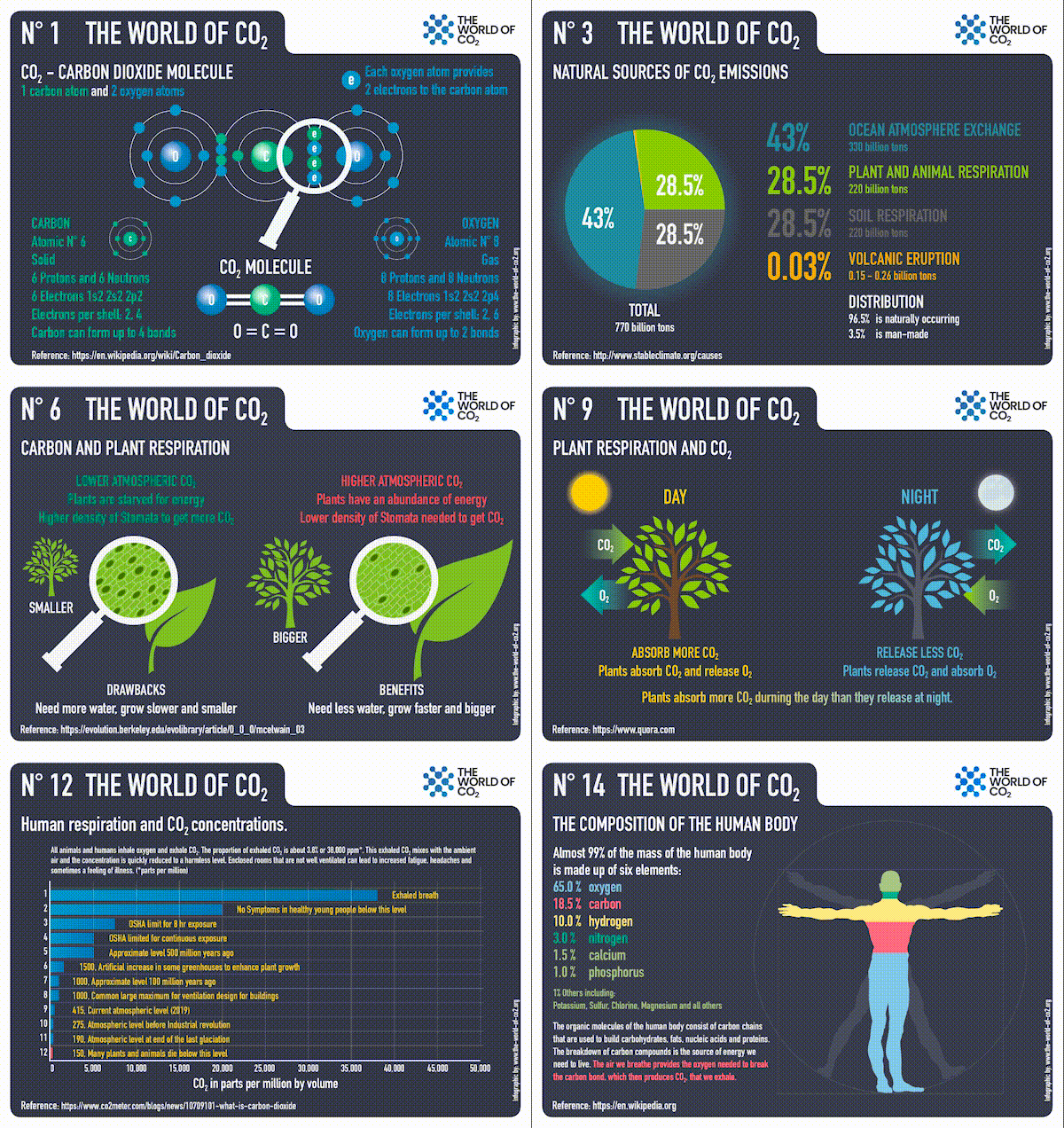
The World of CO₂
Improve your basic knowledge of CO₂, the global carbon cycle, benefits to plants, and even the amount of CO₂ we exhale here.

Updated: Jan. 2023
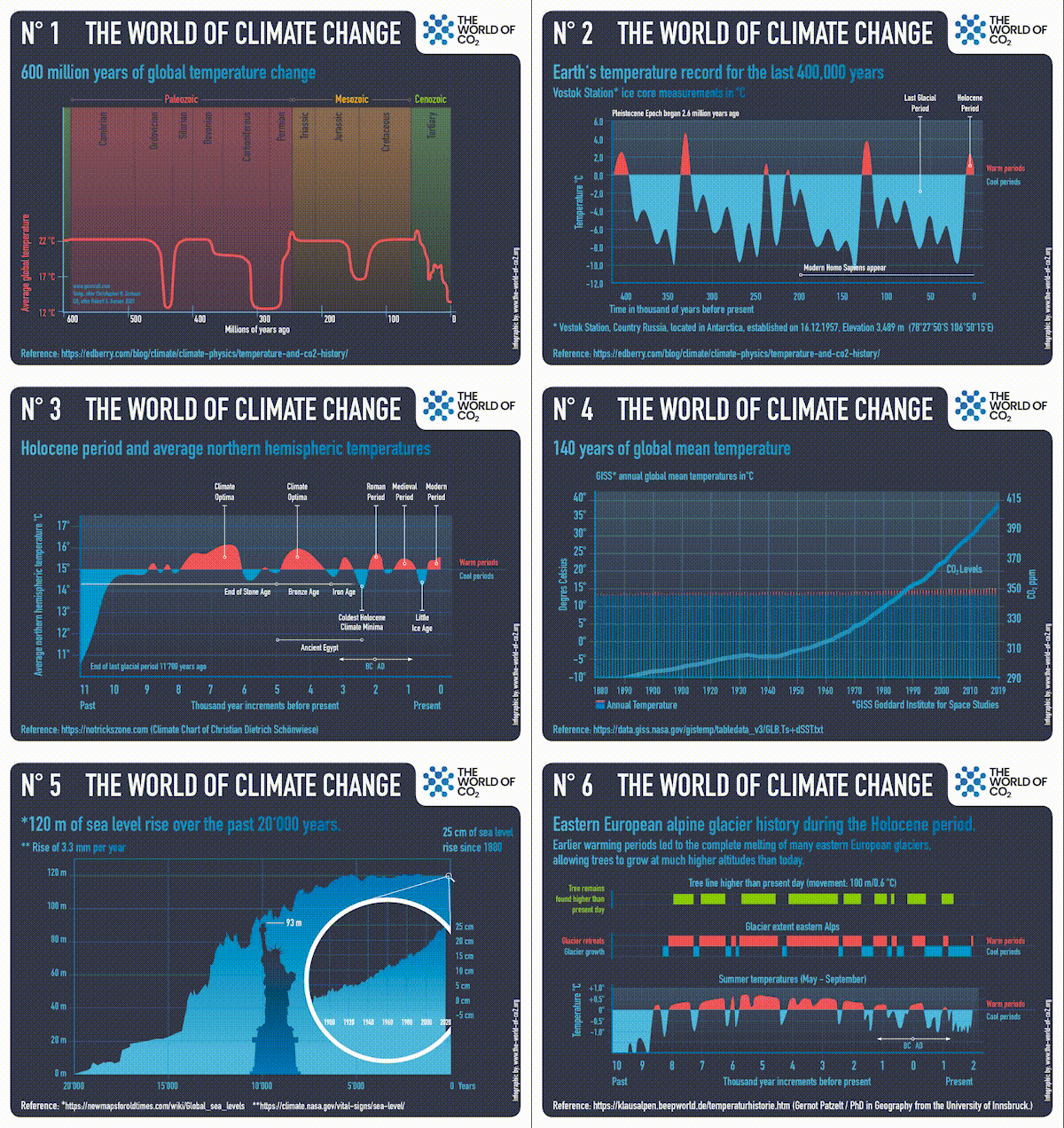
The World of Climate Change
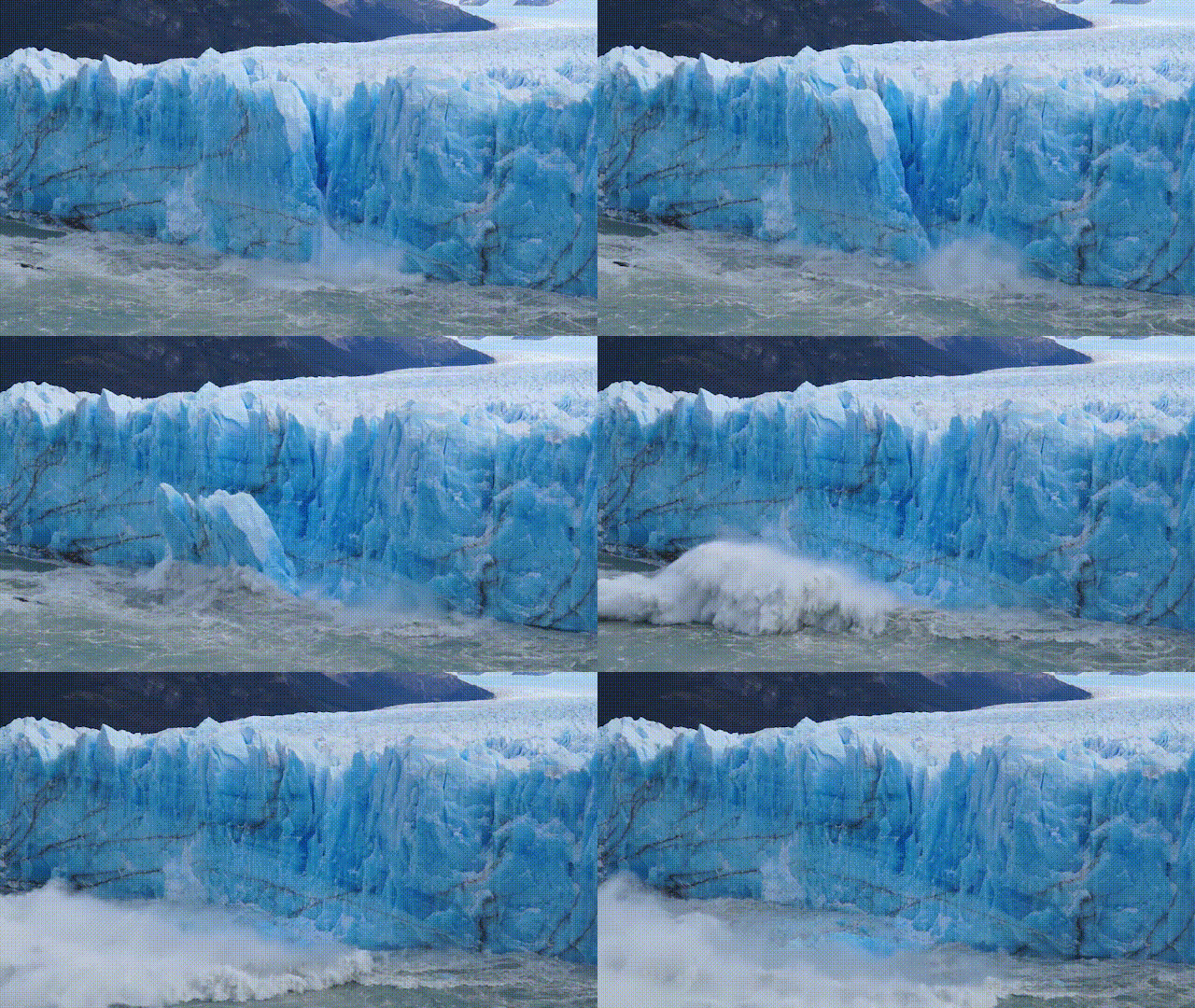
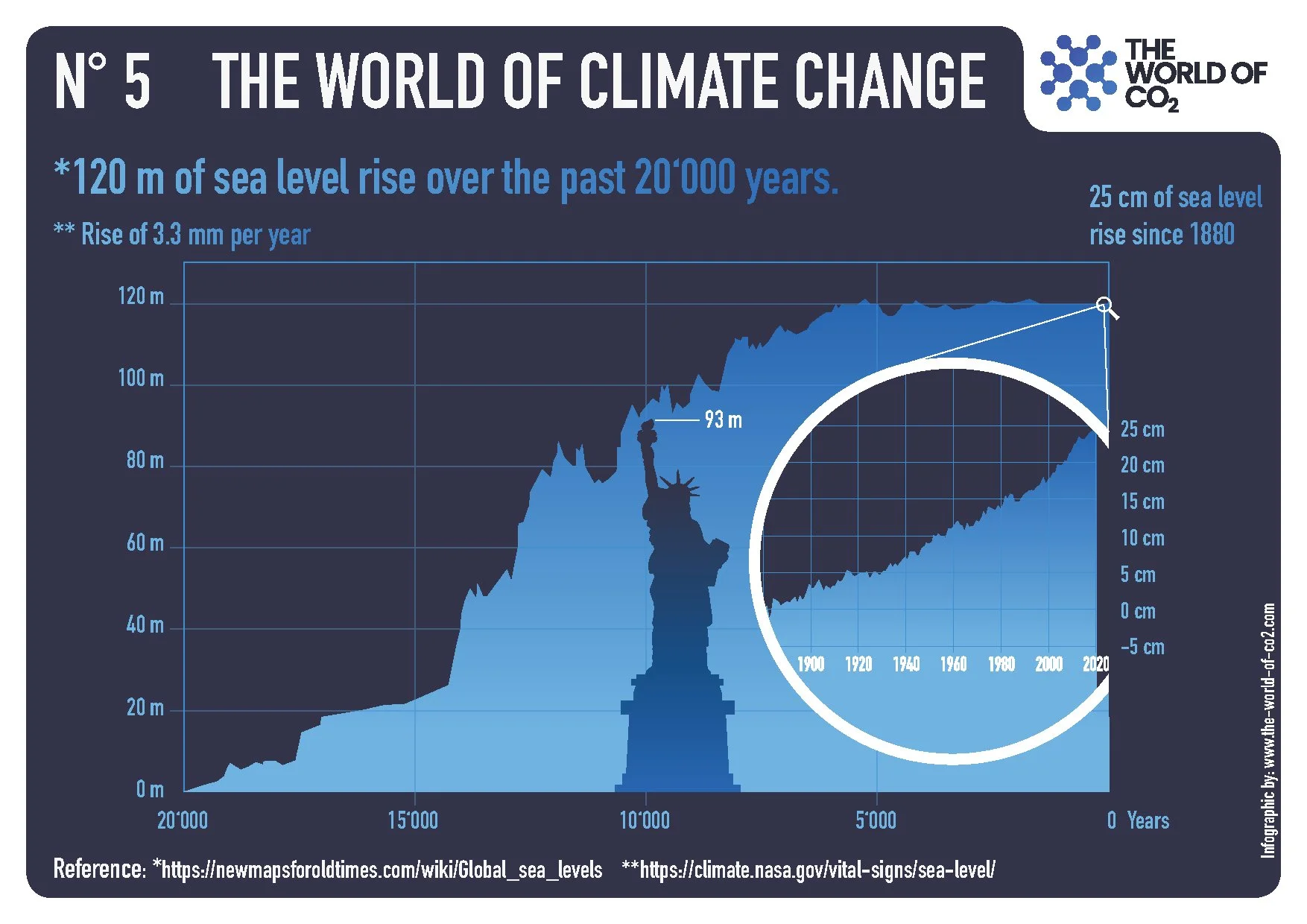
If climate history interests you, learn how much the oceans have risen since the end of the last ice age and much more.
Updated: Jan. 2023
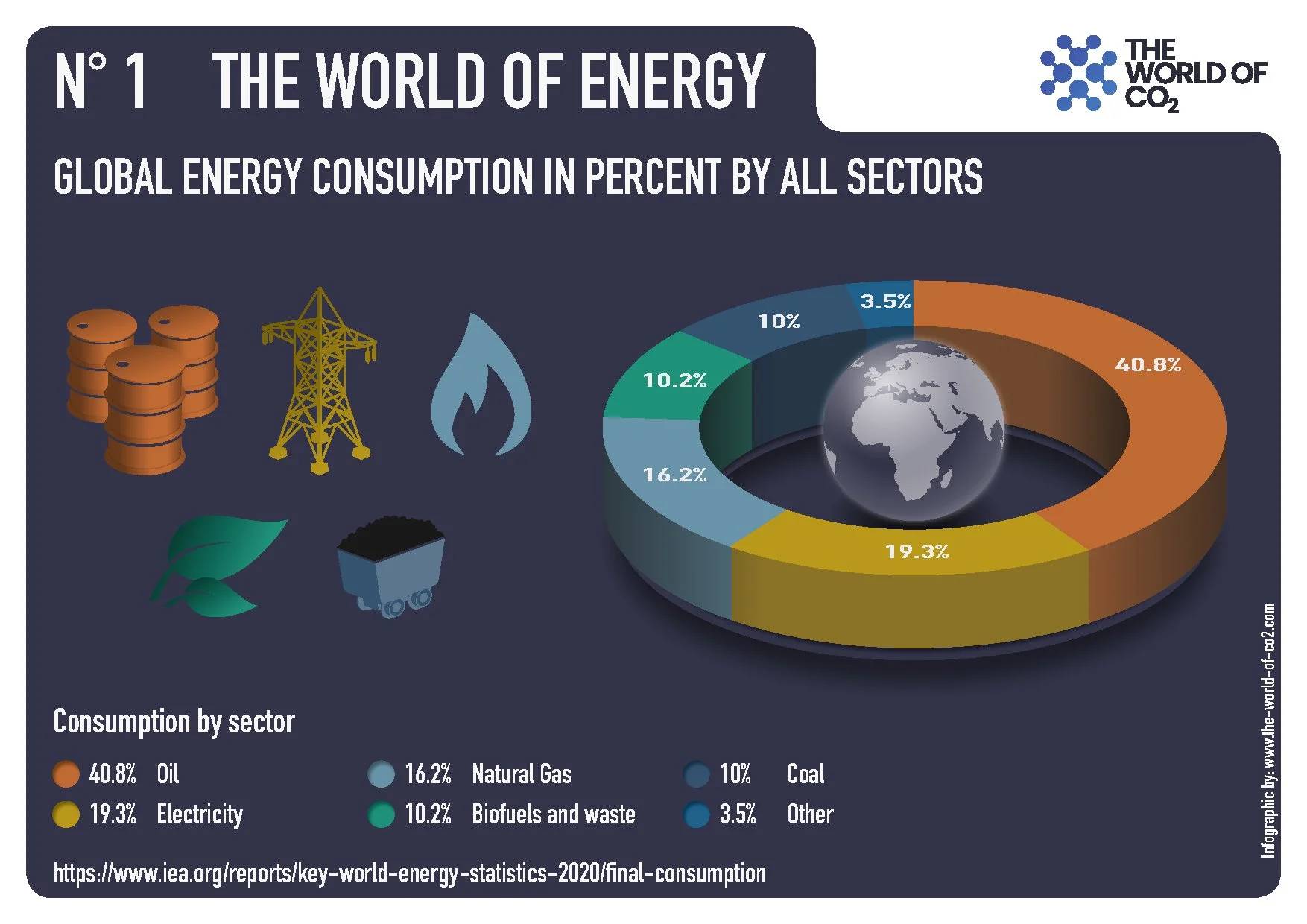
The World of Energy
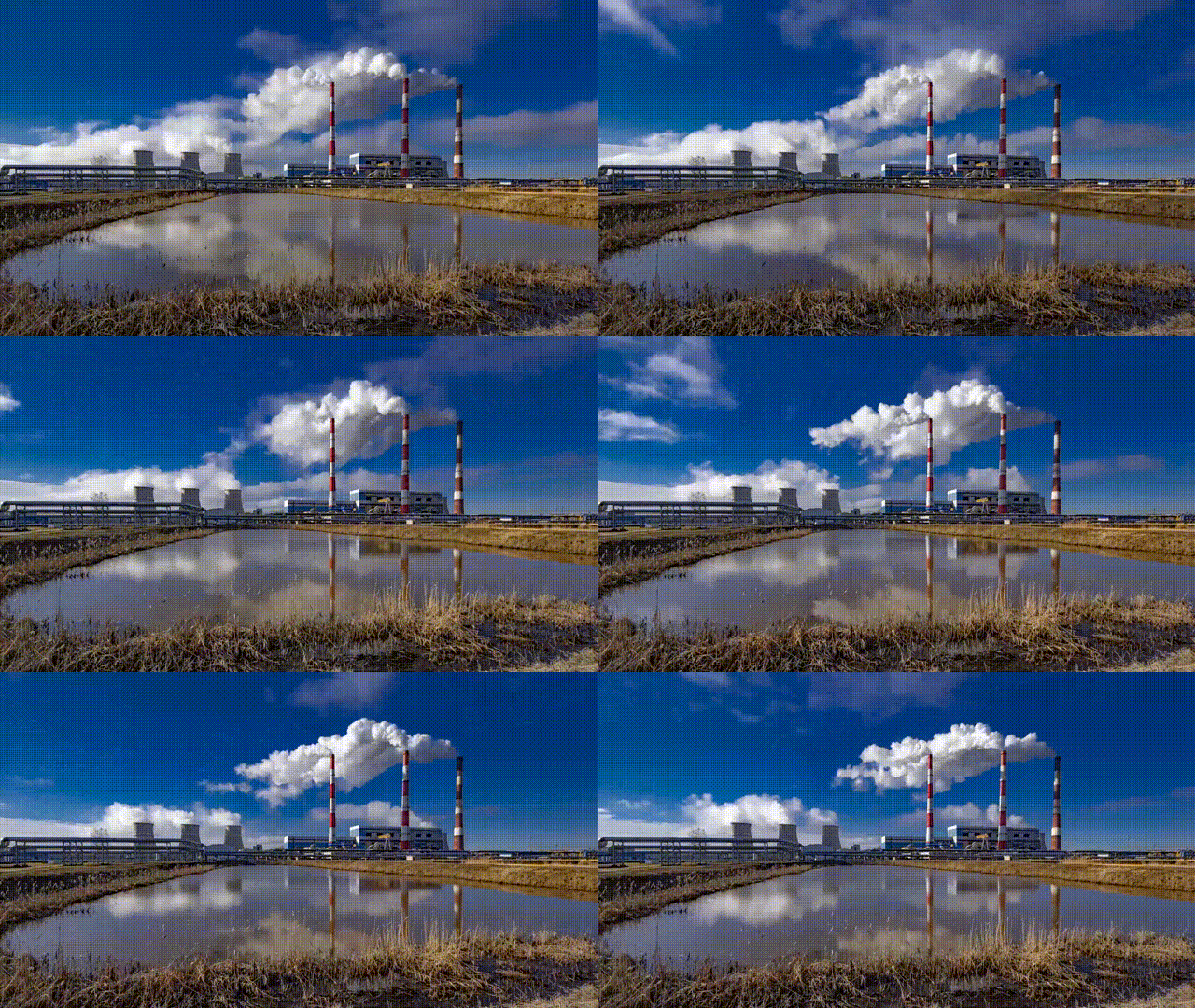
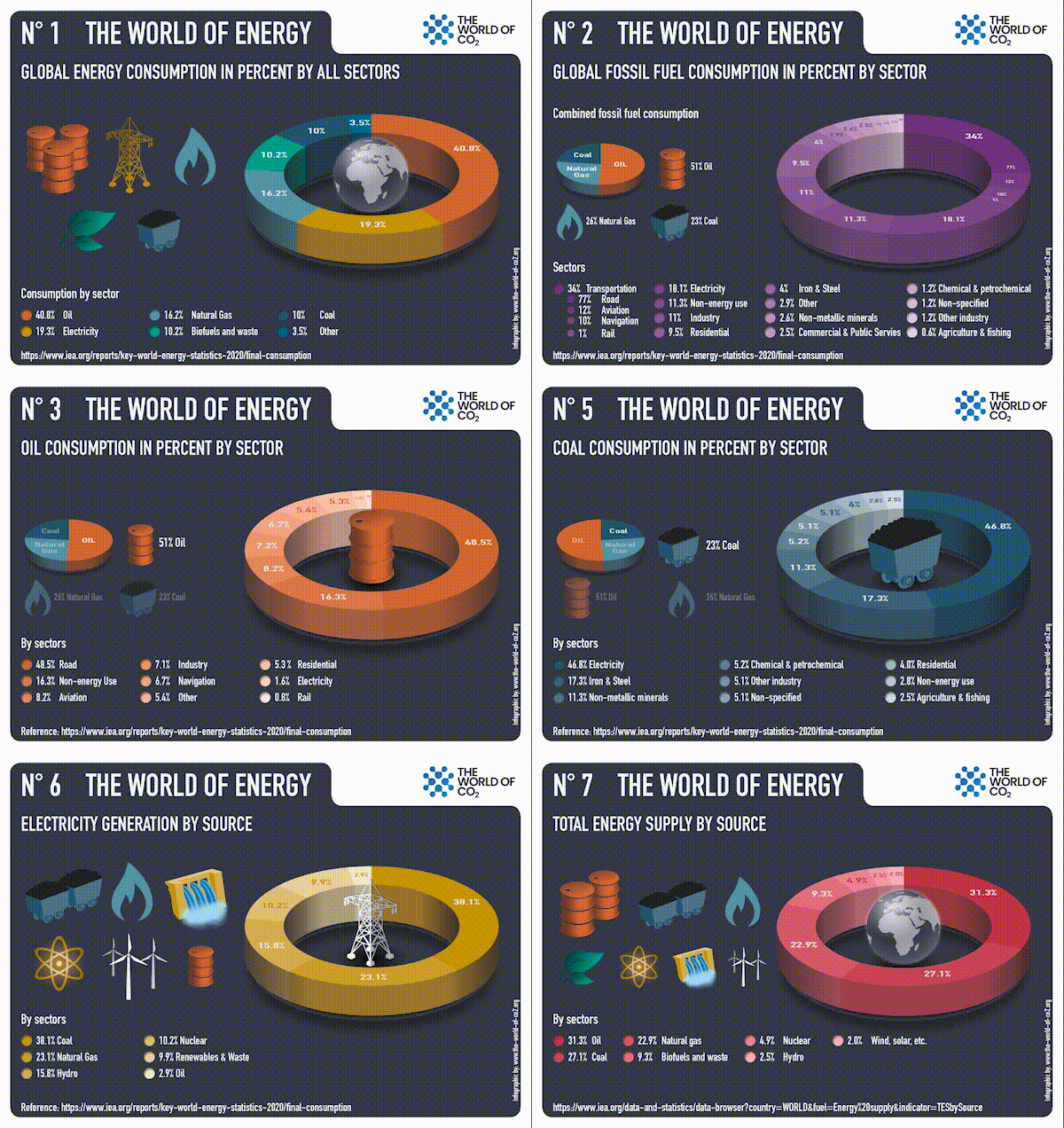
Get an overview of global energy consumption and how much wind and solar energy will provide in the coming years.
Updated: March 2023
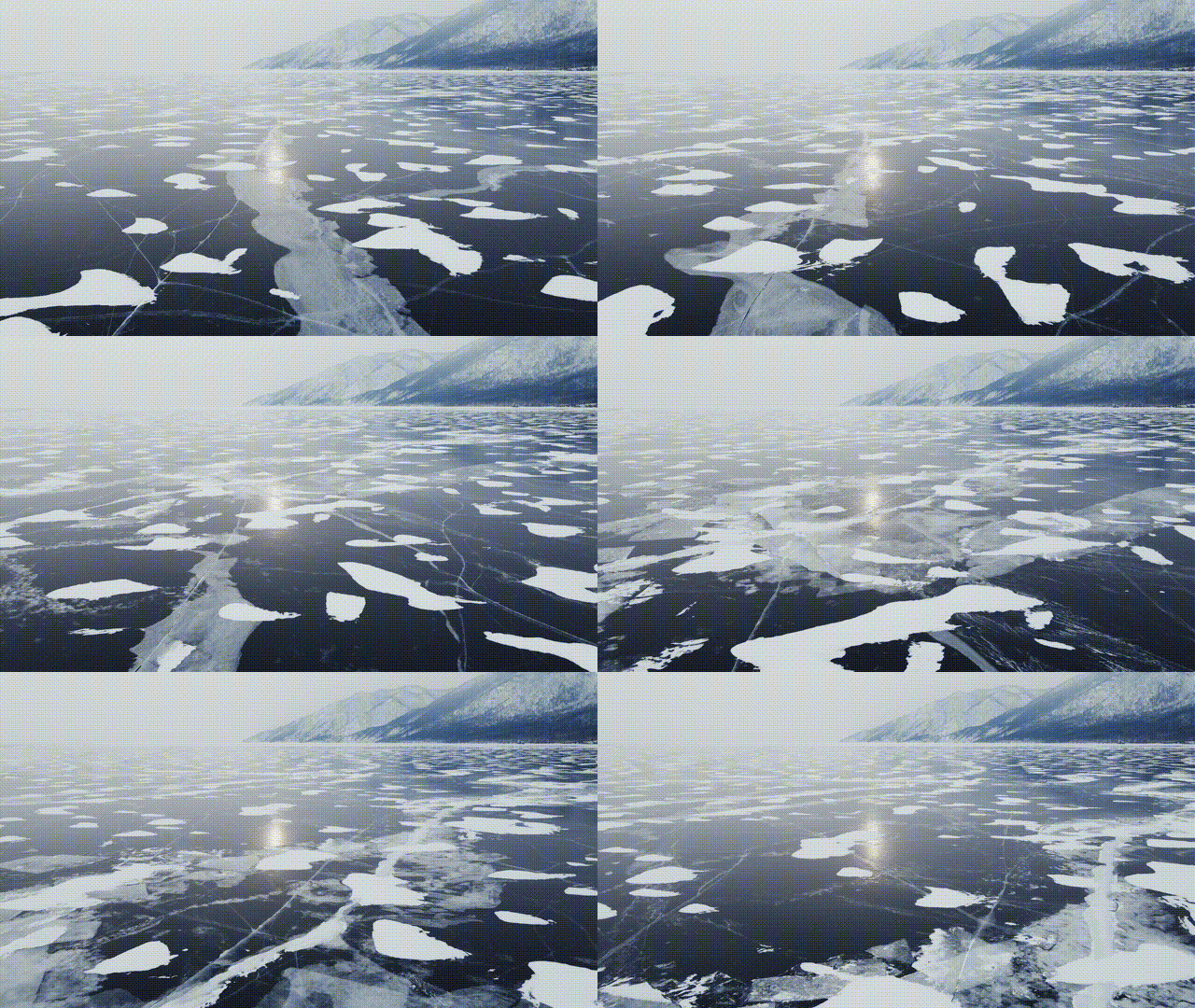
The World of ice ages
Compare the tallest buildings in relation to the last glacial maximum with ice sheets 3300 m thick.
Updated: Jan. 2023
«Extraordinary claims require extraordinary evidence»
Carl Sagan
It's much easier to sell the idea that CO₂ is the sole driver of climate change than to include all the other influences. Climate, is a complex system that isn't driven by one effect alone. The idea that the current warming trend is driven solely by CO₂, whereas in the past all factors would have been considered, is not good science.

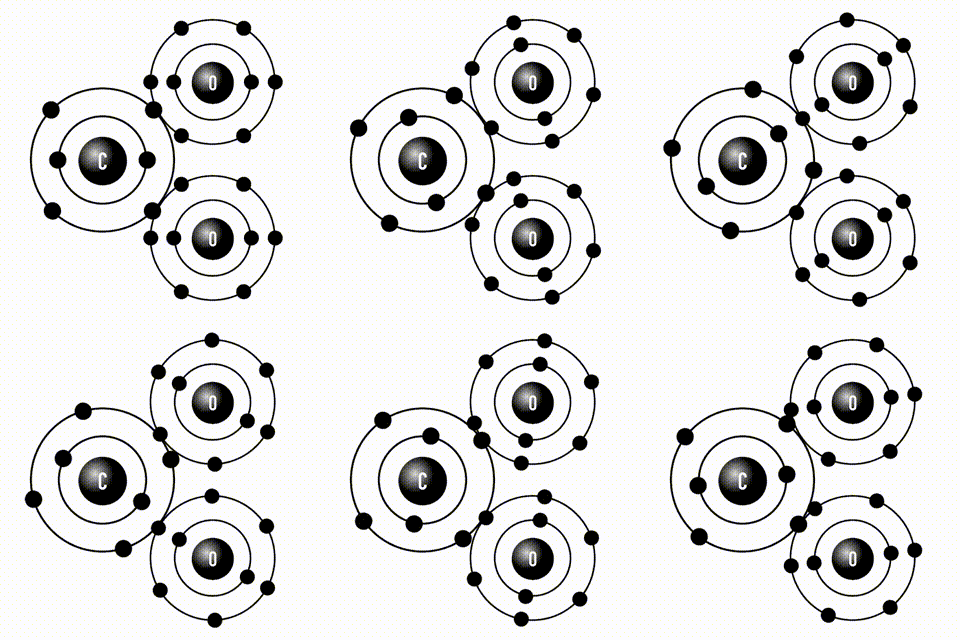
CO₂ Carbon dioxide molecule
1 carbon atom and 2 oxygen atoms
Each oxygen atom provides 2 electrons to the carbon atom. Why does the carbon molecule look bigger than the oxygen molecule? That is because the Atomic radius of carbon is 70 pm (picometers), and that of oxygen is 60 pm.
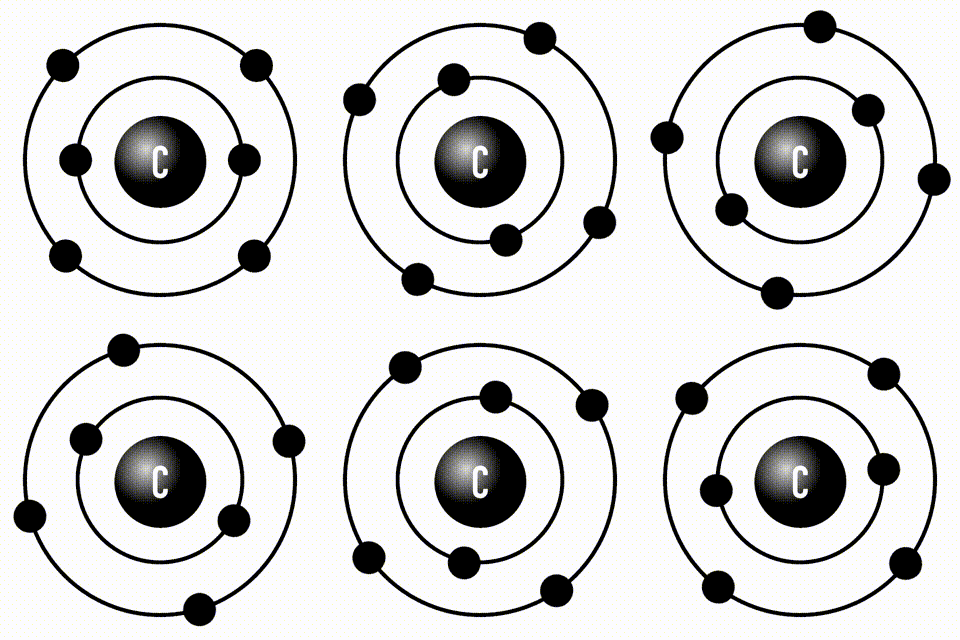
Carbon atom
Atomic N° 6
Solid
6 Protons and 6 Neutrons
6 Electrons 1s2 2s2 2p2
Electrons per shell: 2, 4
Carbon can form up to 4 bonds
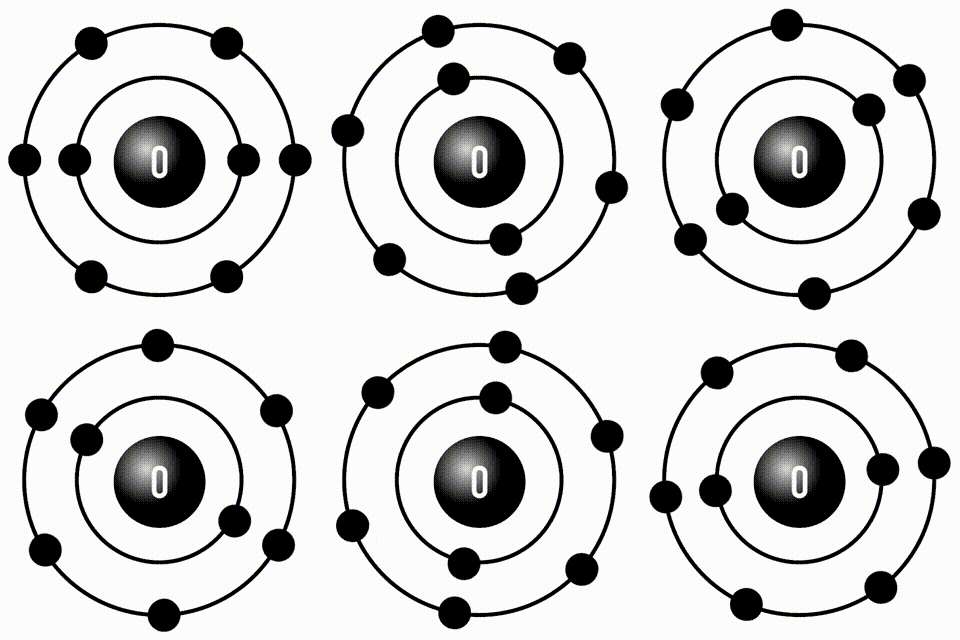
Oxygen atom
Atomic N° 8
Gas
8 Protons and 8 Neutrons
8 Electrons 1s2 2s2 2p4
Electrons per shell: 2, 6
Oxygen can form up to 2 bonds
«Those who are offended by the truth cannot do anything but lie»
Metatron
Grab your mug
and tour
the website

No, we don't have merchandising for this website yet. But you can reach for your mug, fill it with coffee or tea, and tour the site anyway. Maybe CO₂ will rub off on you, and the next time you reach for your mug, you might see the world in a different light.
Concentrations of CO₂
Earth’s atmosphere
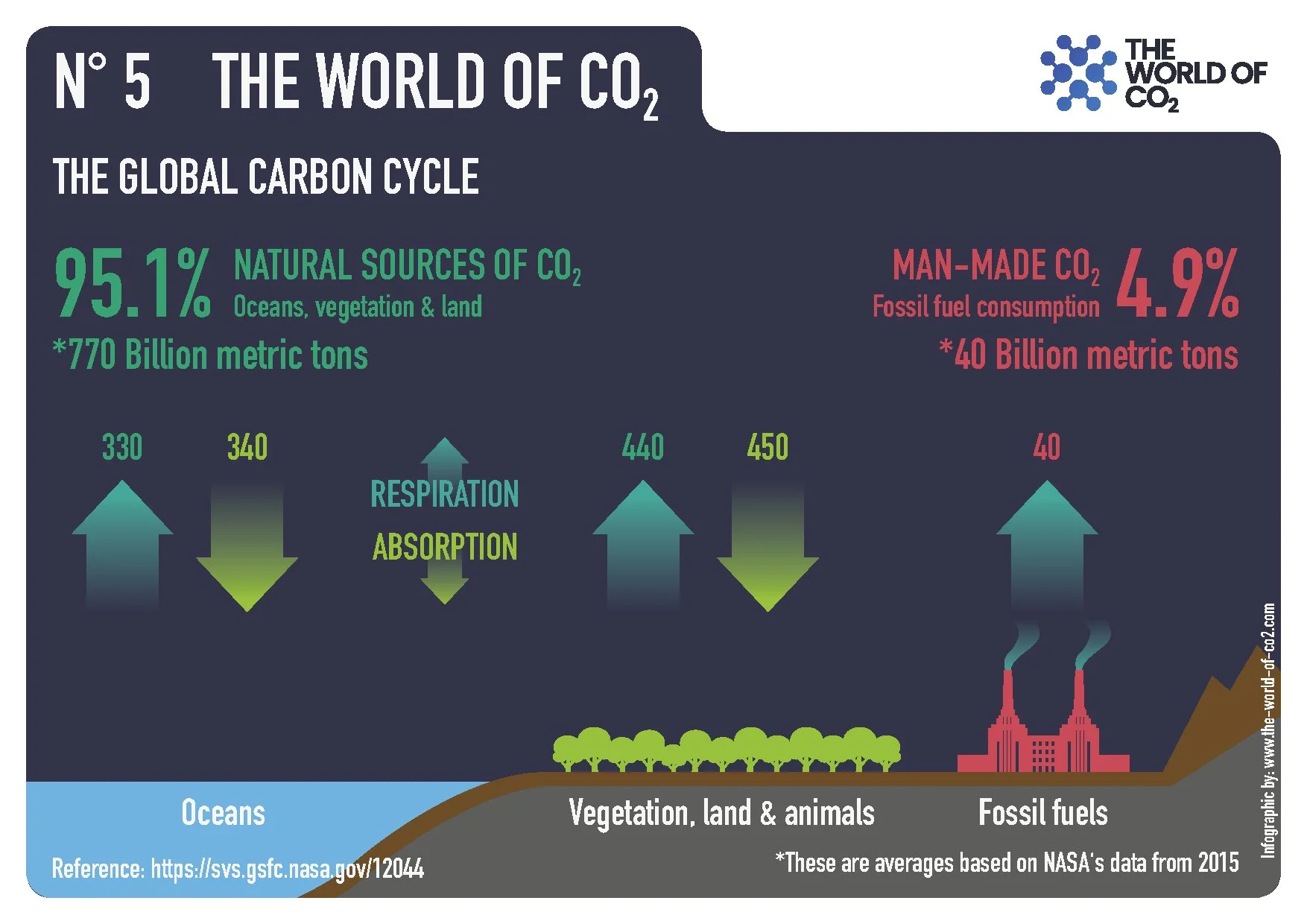
The total mass of Earth’s atmosphere is about 5.5 quadrillion tons*, of which CO₂ makes up about 81 billion metric tons (BMT). Oceans release about 330 BMT, vegetation, land and animals 440 BMT and man-made CO₂ 40 BMT.
*Source Link
Ocean
CO₂ respiration by the oceans is part of the Earth's carbon cycle and helps regulate CO₂ levels in the atmosphere by taking in more CO₂ than it releases. Currently, the oceans emit about 330 BMT of CO₂ annually.
Land, Vegitation and fauna
Soil, vegetation, and animals release about 440 BMT of CO₂ into the atmosphere each year and absorb about 450 BMT. In addition, humans emit about 40 BMT to the atmosphere annually through fossil fuel use, crop burning, and other activities such as agriculture and industry.
«Debate the message, not the messenger»
Unkown

FAQs
-
-
3.5% of atmospheric CO₂ is anthropogenic. Most of this CO₂ comes from the use of fossil fuels such as oil, natural gas and coal.
-
Plants absorb CO₂ durning the day and release O₂ in the process. At night plants release CO₂ and absorb O₂.
-
During the last glacial maximum, CO₂ levels were about 180 ppm, whereas levels in 1800 A.D. – just prior to the Industrial Revolution – were at about 280 parts per million.
The Mission
This website does not seek to deny that climate change is occurring. Rather, it aims to encourage thoughtful examination of how we understand its causes. While it is widely accepted that carbon dioxide (CO₂) is a greenhouse gas and plays a role in Earth’s climate system, an important question remains: is it the sole or dominant driver of climate change, or are there additional natural factors that also contribute to this complex process?
The purpose of this platform is to promote open, respectful inquiry. Scientific understanding has always advanced through questioning, testing, and refining ideas. Raising well-reasoned questions about prevailing interpretations should not automatically lead to dismissal or exclusion from the conversation. Instead, such questions can help strengthen the overall quality of discussion and deepen our collective understanding.
There is a growing concern that discussions around climate change can sometimes become polarized, making it difficult to explore differing perspectives in a constructive way. When dialogue is limited or individuals feel discredited for asking legitimate questions, opportunities for meaningful engagement are lost.
This website aims to create space for a more open and inquisitive approach—one grounded in basic scientific principles and critical thinking. It does not promote unquestionable conclusions, but rather encourages careful evaluation of claims, including those that predict severe or far-reaching outcomes. Scrutinizing significant claims is not a rejection of science; it is a fundamental part of it.
Ultimately, the goal is to support informed, balanced understanding by fostering dialogue that remains open, respectful, and rooted in evidence.

The Physical Scale of Atmospheric CO₂
If all atmospheric CO₂ were compressed into liquid form at a density of ~770 kg/m³, its total volume would shrink dramatically into a cube measuring approximately 16 km × 16 km × 16 km. This represents a ground footprint of 256 km². Visualizing atmospheric CO₂ at this scale transforms an invisible gas into something physically imaginable and reveals the small quantity of carbon present in Earth’s atmosphere.
The total mass of carbon dioxide (CO₂) in the Earth's atmosphere is approximately 3,380 billion metric tons.
United Nations
"We Own The Science"
Melissa Fleming is the Under-Secretary-General for Global Communications at the United Nations. She claims that Google search information on climate change was incredibly biased and wanted to change this by becoming more active on behalf of the UN. She claims "We Own The Science" and that the world should know this. To this end, the UN partnered with Google to put the UN at the top of search results.
A Special Thank You to Ron Clutz
I would like to express my sincere gratitude to Ron Clutz of Science Matters for his invaluable help, encouragement, and mentorship throughout the creation of The World of CO₂.
Over the course of this project, Ron generously dedicated countless hours helping me fact-check, proofread, and verify the scientific content and graphical charts presented on this website. His knowledge, patience, and steady support played a fundamental role in bringing this project to completion.
There were many moments when the scale of the work felt overwhelming and I honestly wondered whether I would ever finish it. Ron never stopped encouraging me to continue. His confidence in the value of this project helped me push forward, even during the most difficult stages.
Without his support, guidance, and friendship, this website simply would not exist in its present form.
I encourage visitors interested in climate science, energy, and broader scientific discussions to visit Ron’s excellent website:
Thank you, Ron. I owe you more than words can express.
— Raymond Inauen
If you don't know, the thing to do is not to get scared, but to learn.
Ayn Rand